
Drawing the line
The Struggles of Being Your Own Game Artist as an Indie Creator
When you’re starting out as a game designer or launching a small studio, the dream is vivid, the passion is endless but the budget is often painfully limited. One of the biggest hurdles we face in the early days isn’t necessarily mechanics, balance, or even manufacturing, it’s art.
Yes, art.
Illustration is the face of your game. It’s what players see first on the box, what pulls them into your world, and what gives life to the mechanics you’ve spent months or years refining. And when professional artwork can easily cost upwards of €10,000 to €20,000, it becomes clear: for many indie creators, doing the art yourself can feel like the only path forward.
The Illusion of Delegation
In the beginning, it’s common to think: “I know someone who draws well maybe they’ll help me.” Friends, family members, partners who sketch beautifully or dabble in design often become our first go-to collaborators.
And while intentions are usually good, reality hits hard.
Even when we offer to pay (albeit modestly), the motivation gap becomes evident. They don’t share your timeline, your urgency, or your personal investment in seeing the game succeed. Their availability wanes, life gets in the way, and soon you find yourself with a half-finished board and a blank card template… again.
Doing It Yourself: Between Passion and Frustration
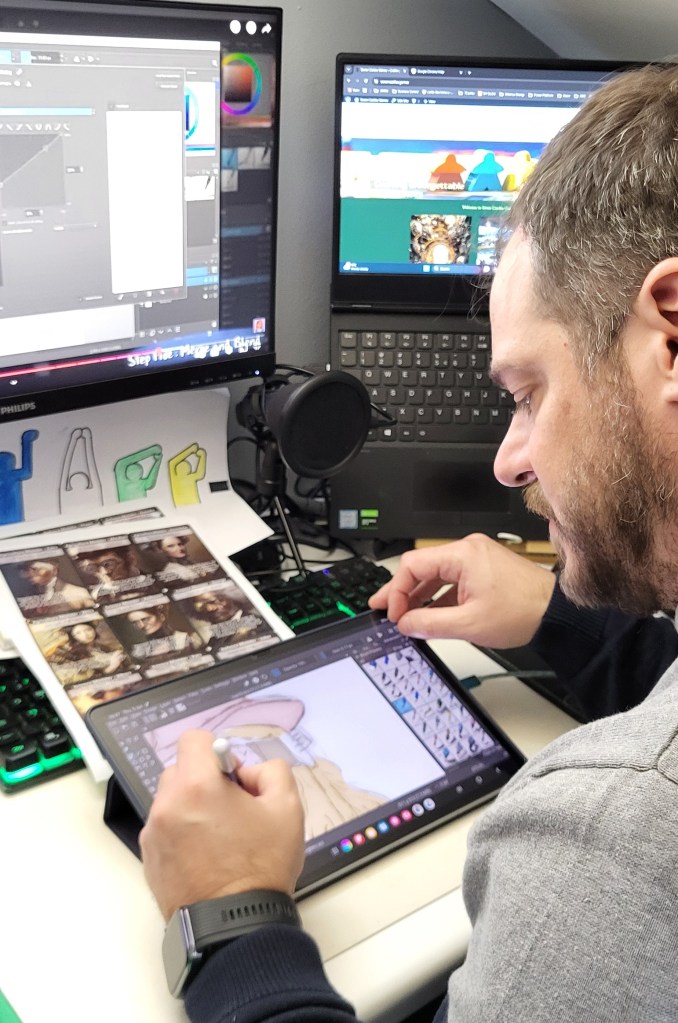
So you roll up your sleeves and start drawing.
For many of us, this is terrifying. We’re not trained illustrators. We’re designers, writers, tinkerers our creativity lives in spreadsheets and sleepless nights, not in brushstrokes and colour palettes. But we learn. We open free tools, watch YouTube tutorials, and spend weekends making icons that might not be perfect but are ours.
It’s a slow, painstaking process. But it gives us full control over deadlines, revisions, and most importantly, the rights to our own images.
The Cost of Creative Freedom
Let’s be clear: this is not a complaint about illustrators. They are professionals with every right to charge fair prices and to license their work as they see fit. Their talent is what makes many games unforgettable.
But for a new studio trying to survive and bring a vision to life, those costs and licensing restrictions can be a dealbreaker. If we don’t retain full rights, if we can’t use the artwork for print runs, promotions, or expansions without renegotiating terms, then we’re building a business on fragile ground.
Striking a Balance
In a perfect world, every indie designer would have a trusted, equally motivated artist partner or a bank account big enough to hire one. Until then, many of us will continue to sketch, revise, and design within our means, not just out of necessity, but because it’s part of the journey.
Every imperfect line drawn by a passionate creator tells a story of resourcefulness and resilience.
And maybe, just maybe, that story is exactly what players connect with when they open your game.
by Hugo Silva, 2025
 Seven Castles Games